In an era of global environmental change, understanding the processes that drive carbon sequestration in ocean ecosystems is essential, as these processes play a crucial role in regulating the Earth's climate.
Against this backdrop, the LADDER expedition – Observing the “ladder of migrations” to the deep sea aims to develop a holistic understanding of biodiversity and trophic structure in mesopelagic and bathypelagic ecosystems, down to depths of 5,000 metres, across the subtropical and tropical Northeast Atlantic. The expedition seeks to investigate the existence of synchronised, stepwise vertical migrations throughout the water column, connecting the ocean surface to the deep sea through trophic processes.
This highly technological mission combines CTD systems equipped with environmental sensors, Niskin bottles and sampling nets for collecting water and microplankton samples, alongside a range of echosounders, prototype optical profilers with different capabilities, and micronekton and plankton nets (RTM8 and Multinet).
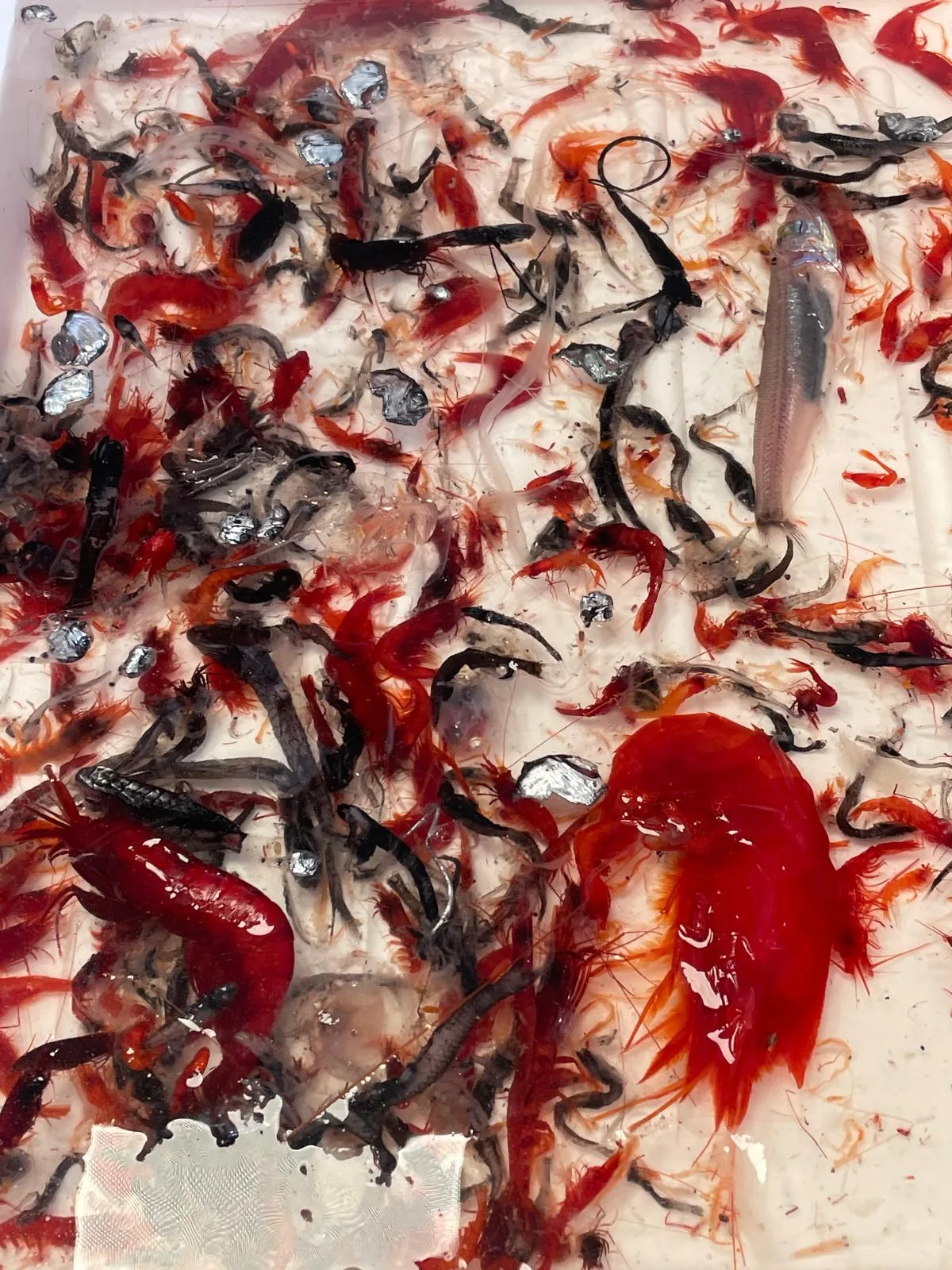
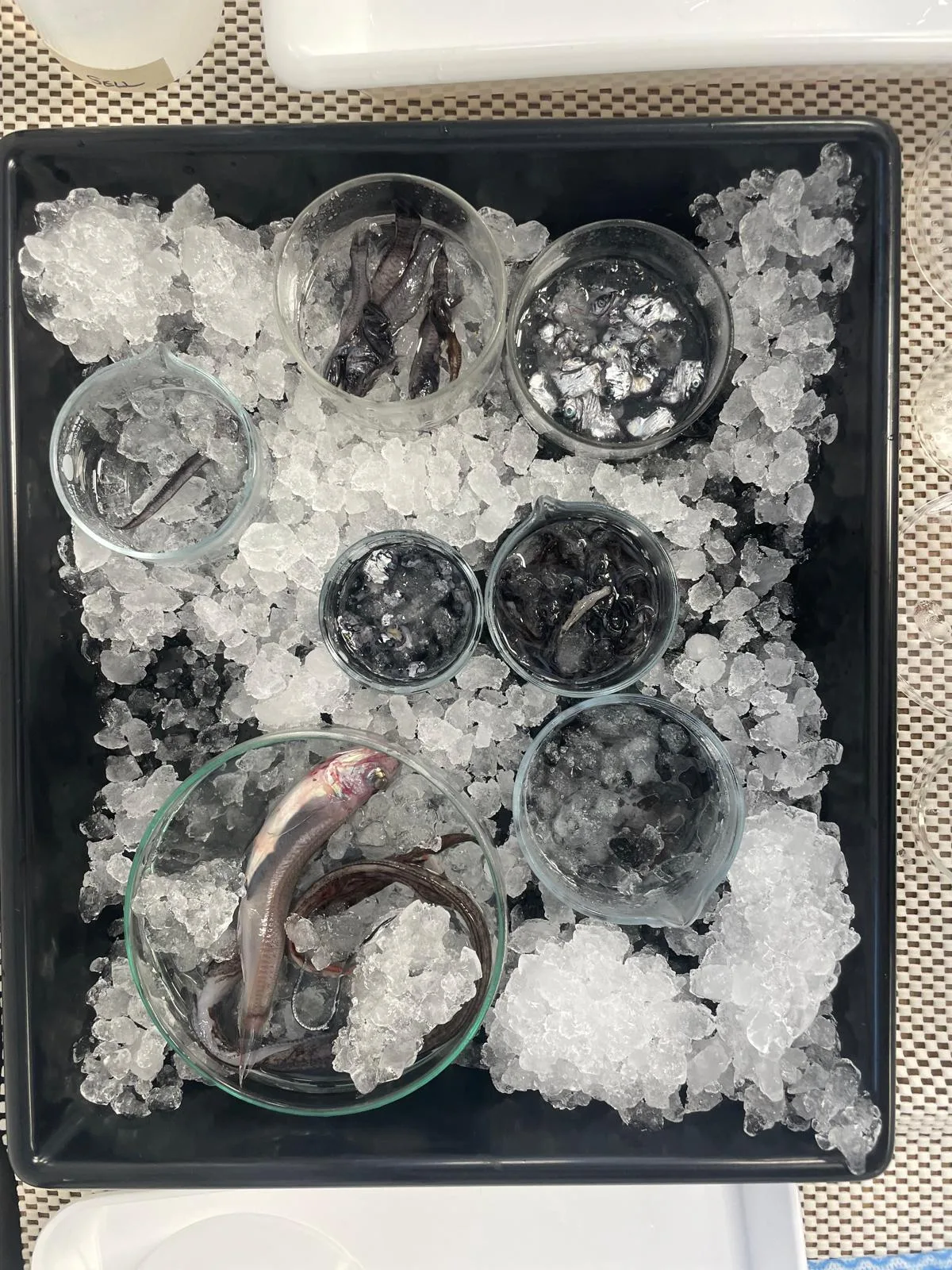
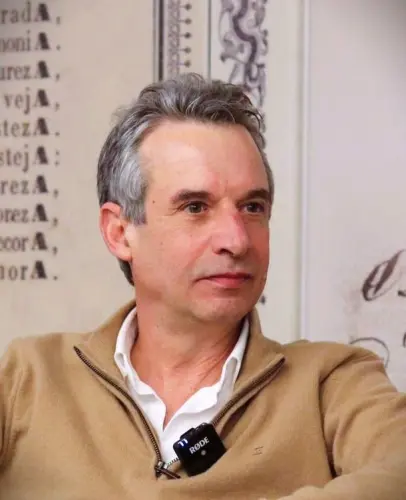
Filipe M. Porteiro, researcher at OKEANOS, is participating in the LADDER expedition as a specialist in mesopelagic and bathypelagic fish. The collected samples will be used to investigate biodiversity, feeding processes (through stomach content metabarcoding and stable isotope analyses), and metabolic respiration rates (using ETS – Electron Transport System analysis) in migrating organisms, including fish, shrimp and squid, to better understand their role in the carbon cycle.
Environmental DNA (eDNA) analyses, acoustic biomass profiles, and micro- and macroplankton data collected through nets and imaging systems, with the support of artificial intelligence, will further contribute to this comprehensive assessment of the ecosystem.
The expedition's main challenge lies in integrating the collected information into a conceptual model that improves our understanding of carbon fluxes throughout the water column, through the mechanism known as the biological carbon pump.
The scientific team, comprising senior researchers and students, is led by Jan Taucher from GEOMAR. The expedition is part of the ERC Consolidator project SEA-THROUGH – Novel in situ imaging technology to explore the “ladder of vertical migrations” to the deep sea.
The expedition is taking place aboard the German research vessel R/V Maria S. Merian, between the Azores and Cape Verde, from 10 October to 5 November 2026.