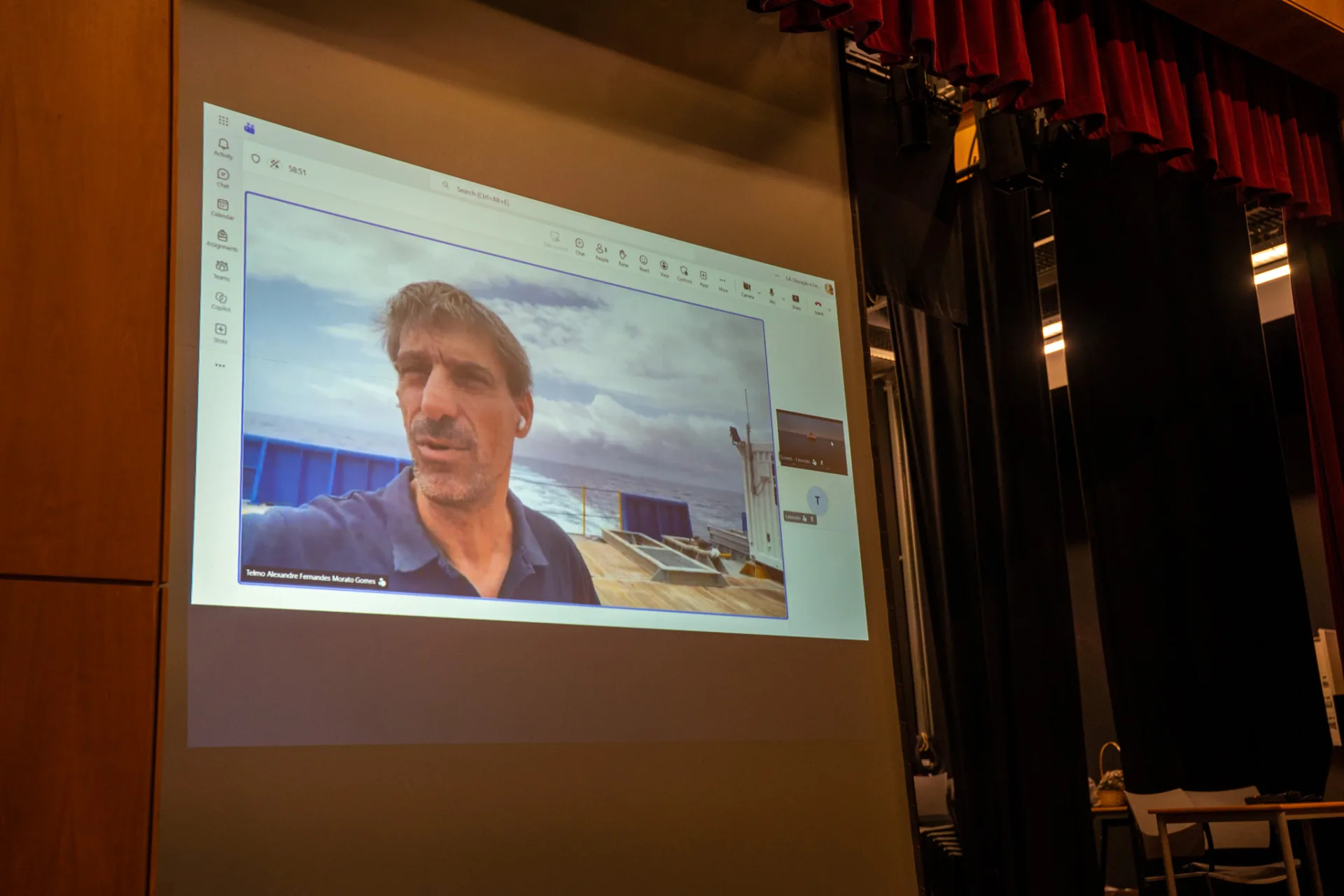
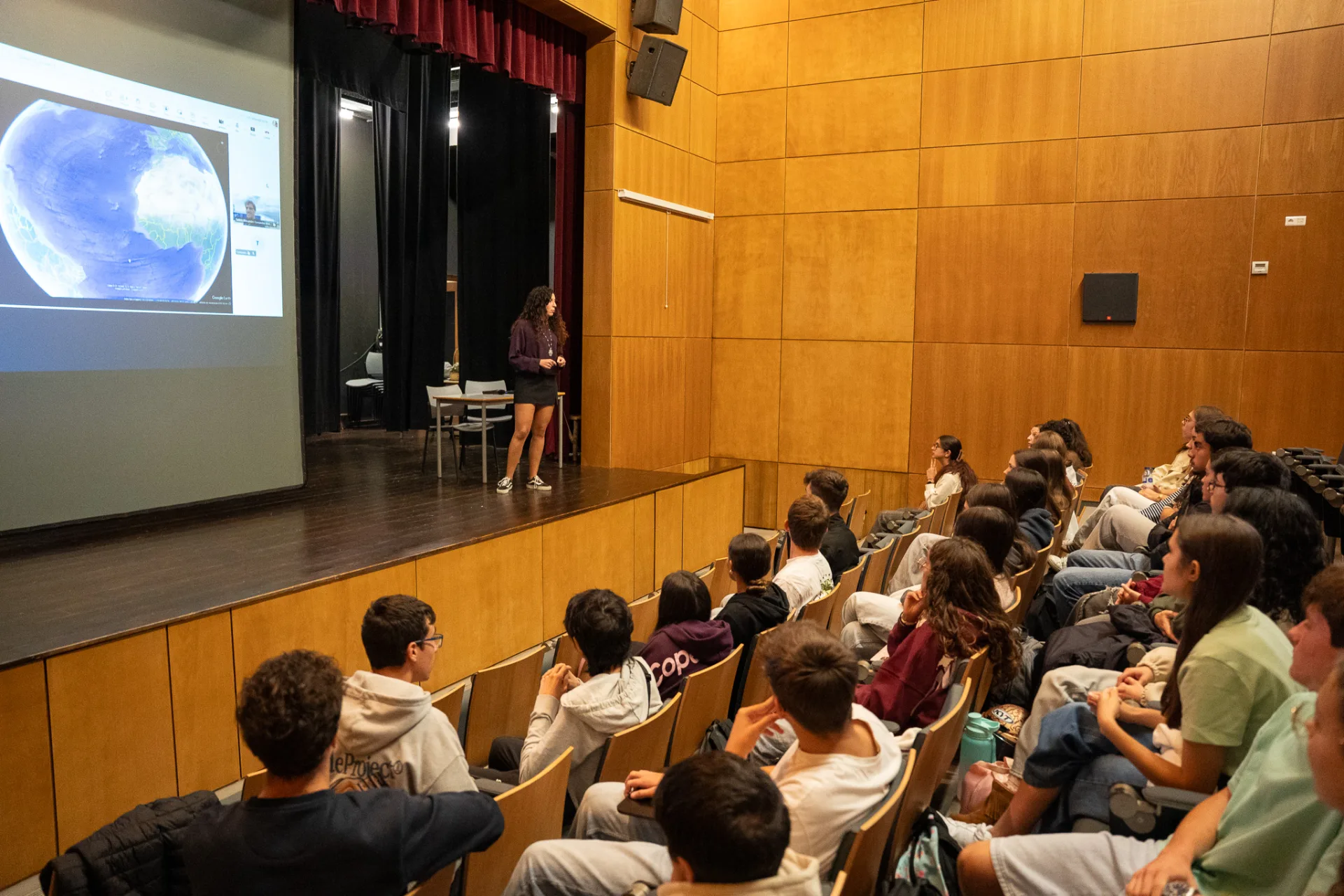
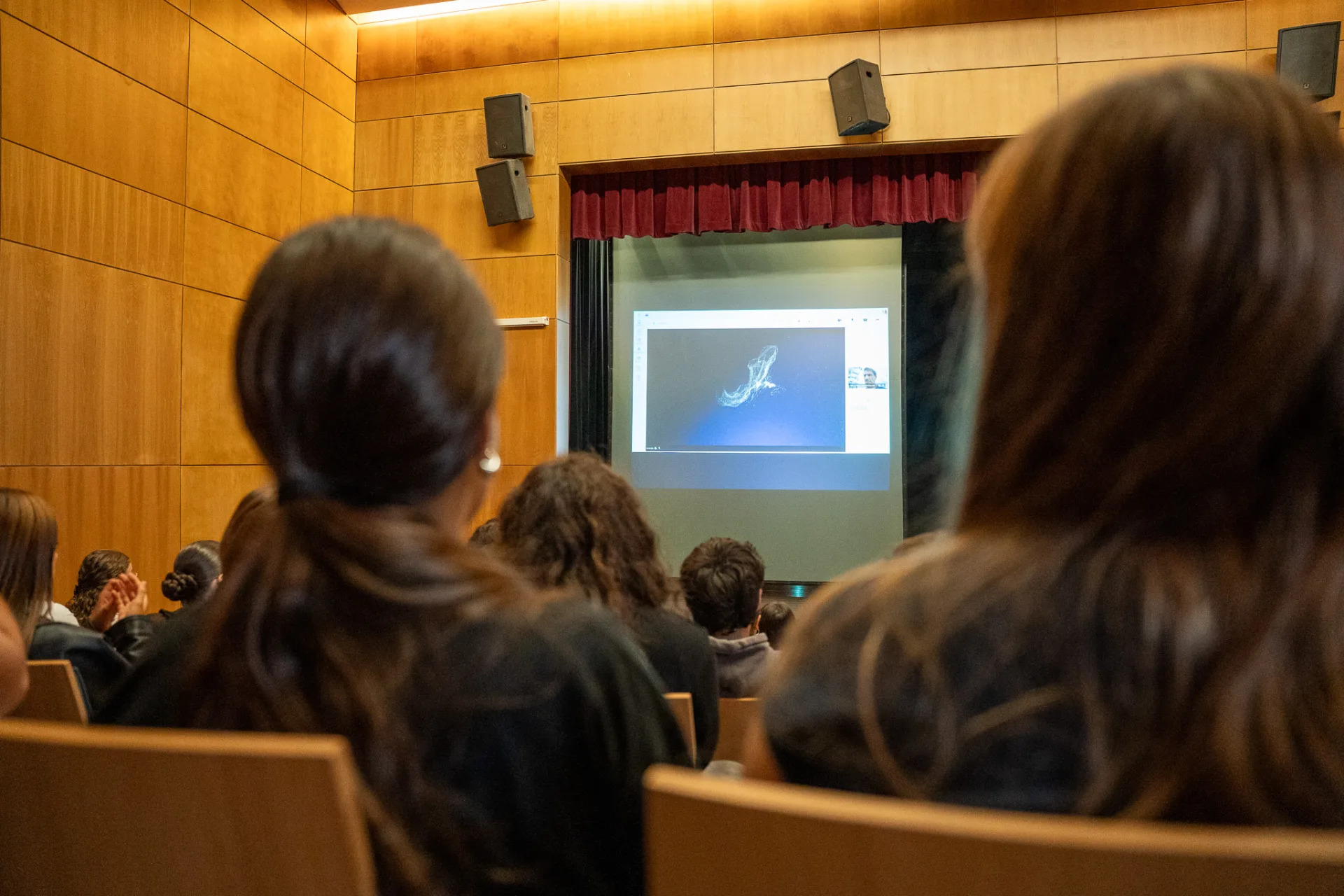
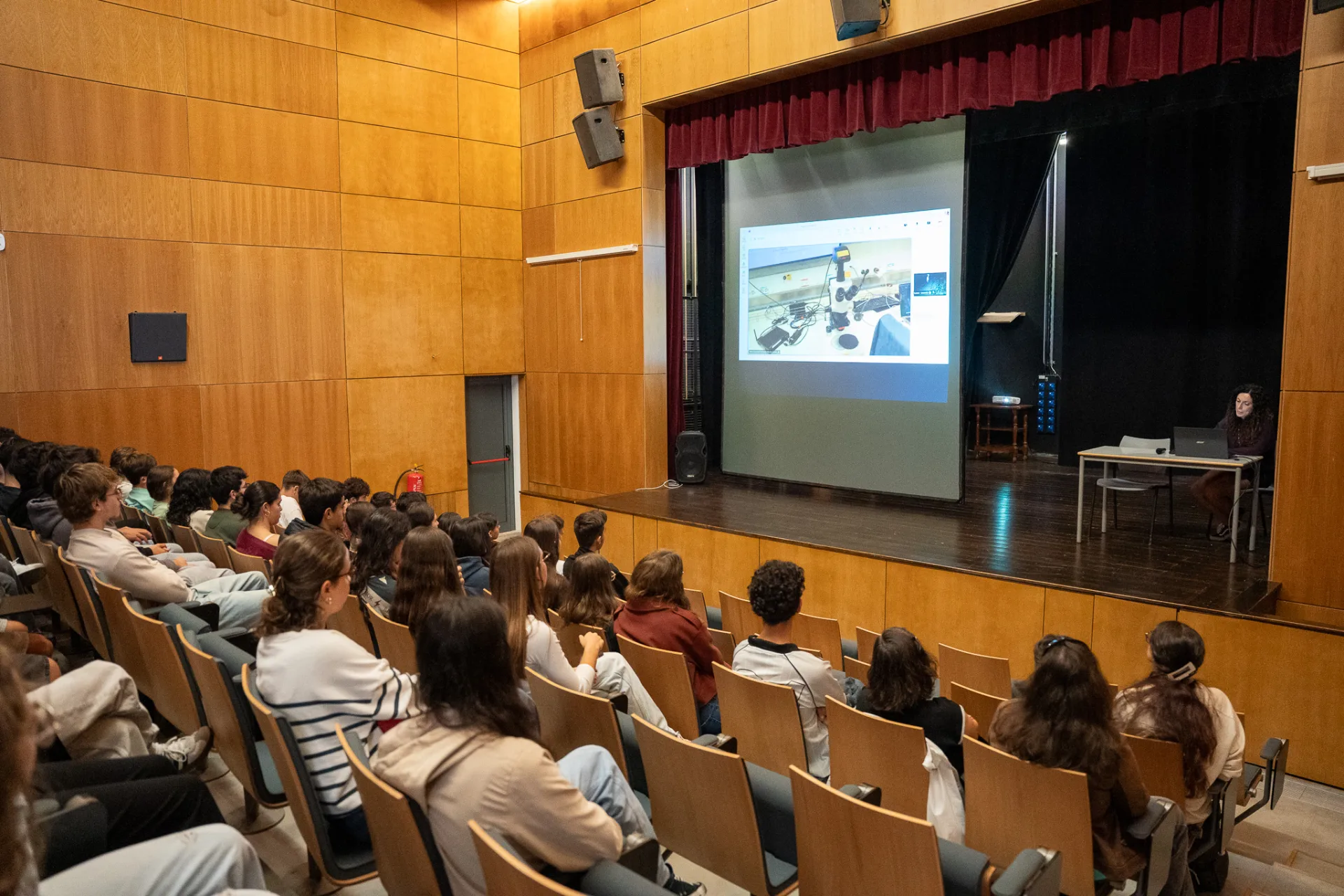
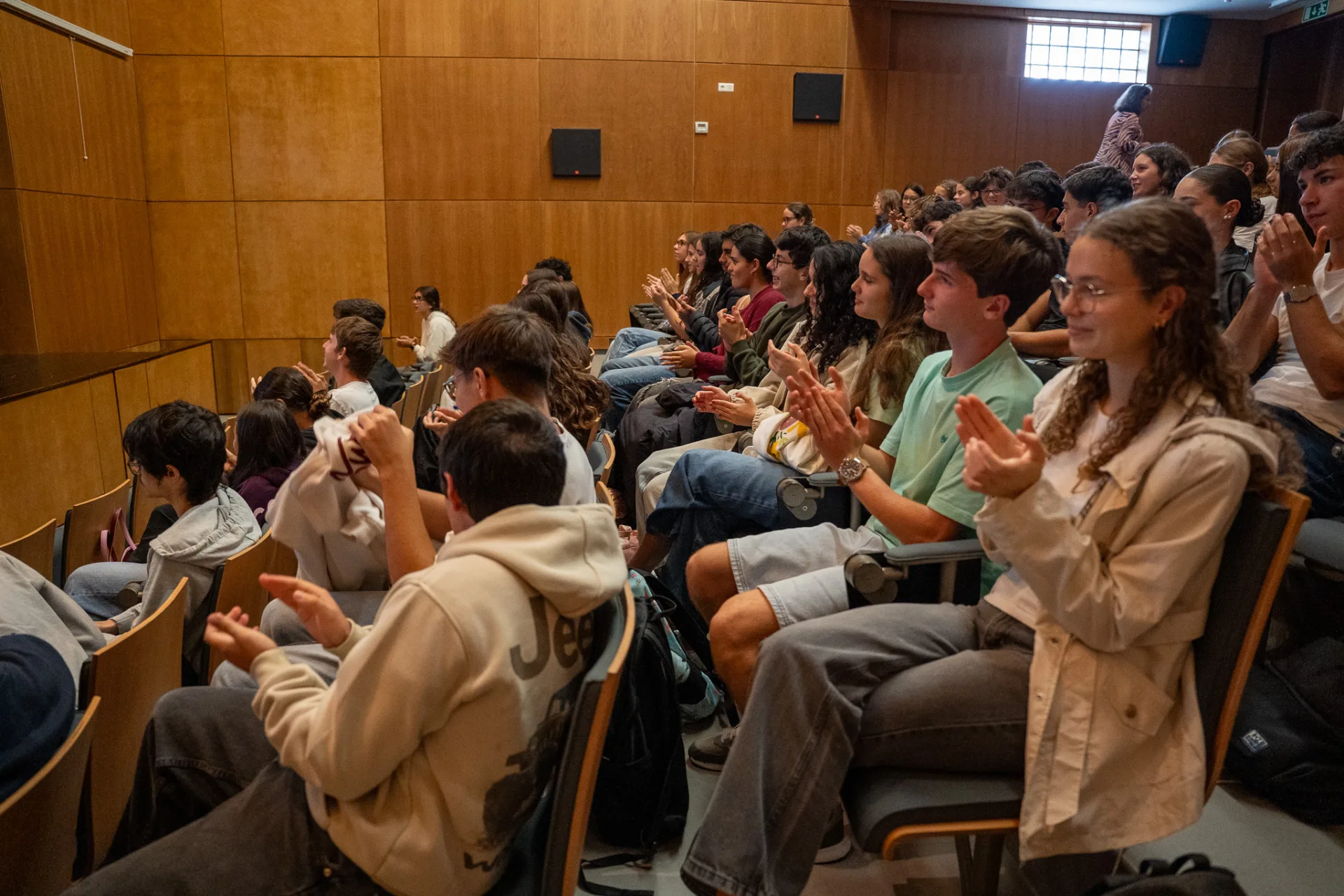
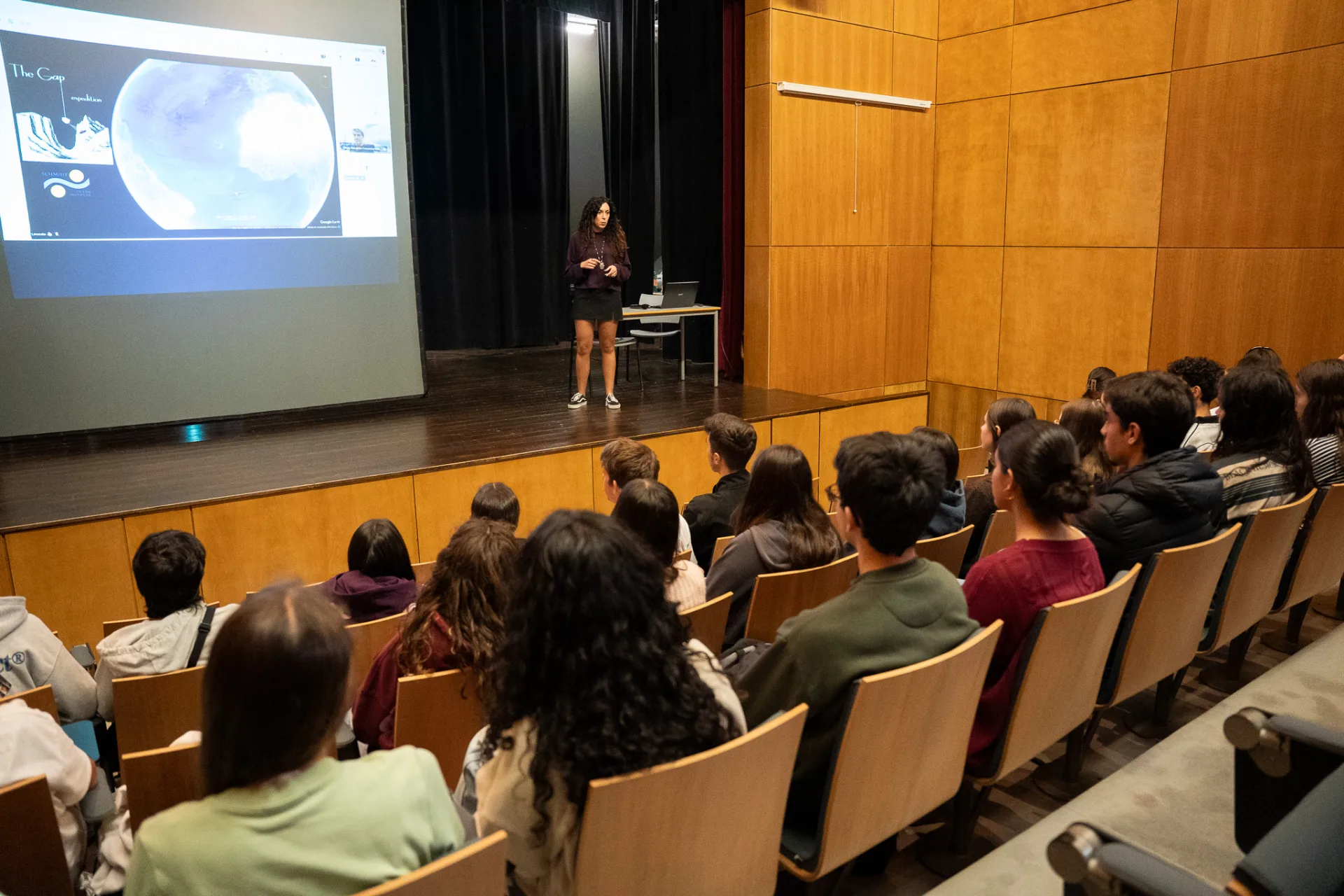
On Monday, 26 October, around 50 students from Manuel de Arriaga Secondary School in Horta had the opportunity to learn more about deep-sea scientific research through a live video connection with Telmo Morato, a researcher at the Institute of Marine Sciences – OKEANOS, University of the Azores, aboard the research vessel R/V Falkor (too).
The initiative, entitled Ship to Shore, took place as part of the The Gap scientific expedition, led by the Schmidt Ocean Institute, just two days before the researchers disembarked, offering students a unique opportunity to experience an ongoing scientific mission.
During the video call, students discovered how a scientific expedition dedicated to deep-sea research operates, learned about some of the most fascinating organisms inhabiting the ocean depths, and explored the working environment aboard a research vessel.
The live connection also introduced students to the operation of a remotely operated vehicle (ROV), used to explore and study hard-to-reach areas of the ocean, and included a virtual visit to the control room, where underwater exploration operations are monitored and coordinated.
One of the highlights of the activity was the direct connection with researcher Telmo Morato, who shared insights into the scientific mission, deep-sea biodiversity, and the technologies used in ocean exploration. The session provided an opportunity to raise awareness of the importance of marine scientific research, sparking students' curiosity about the challenges of ocean exploration and the different academic and career opportunities associated with marine sciences.
Special thanks go to Biology teacher Cecília Dutra, from Manuel de Arriaga Secondary School, for accepting the invitation and embracing the challenge of bringing this experience directly to her students, encouraging them to discover new perspectives on the future of Biology and, in particular, deep-sea research.
This activity highlights the importance of strengthening connections between the scientific community and schools, demonstrating how technology can bring young people closer to the science being conducted in the ocean, even thousands of metres below the surface.