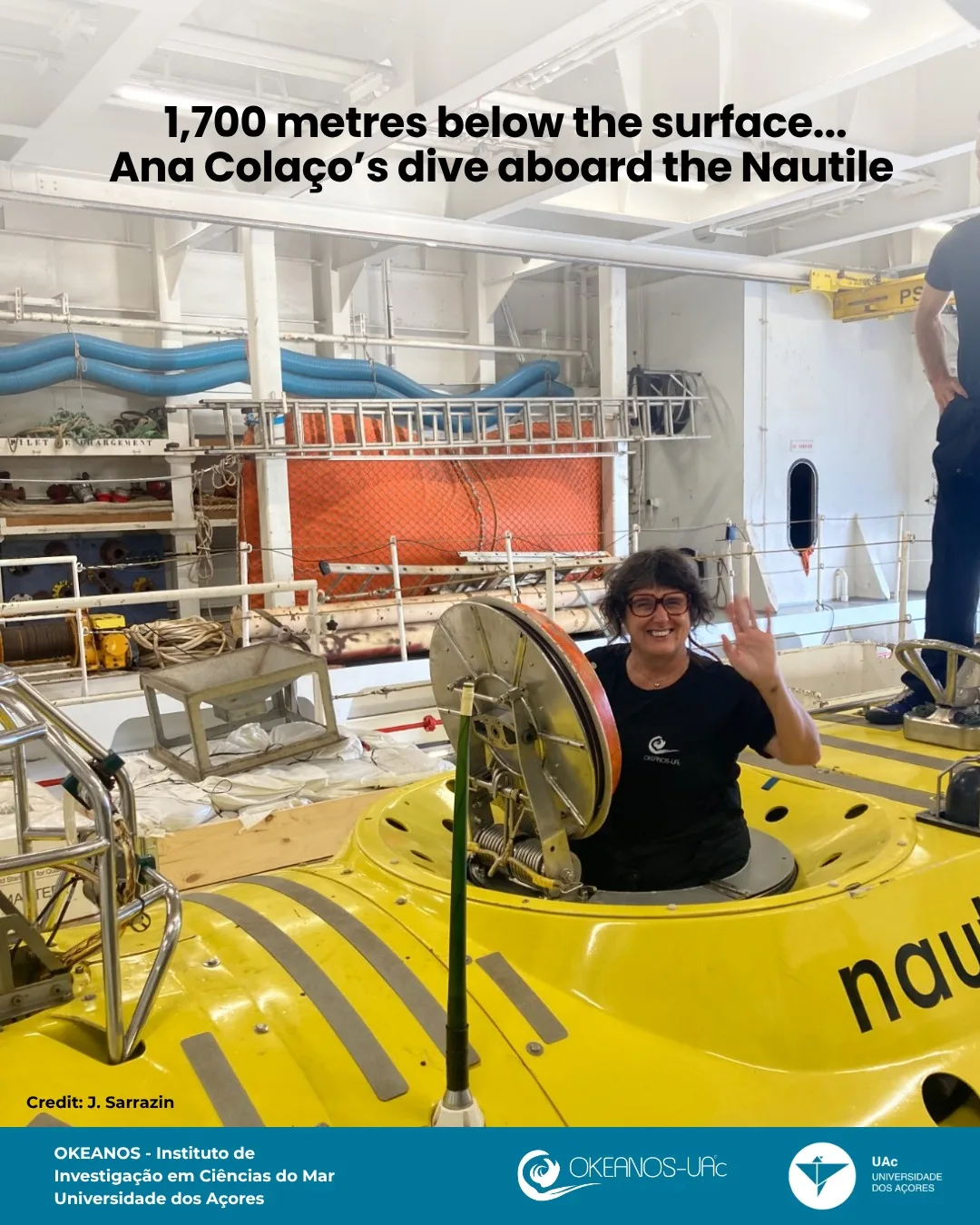
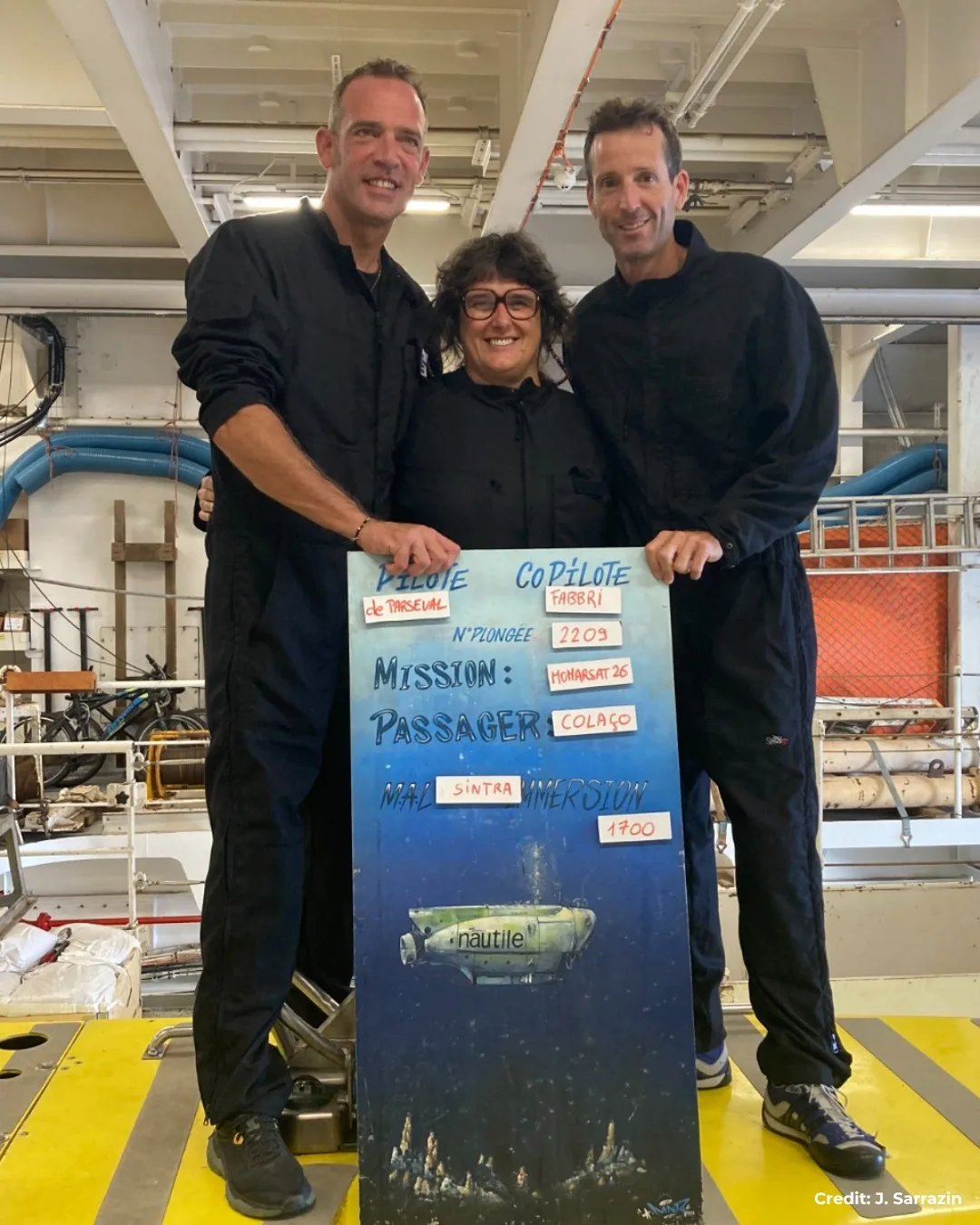
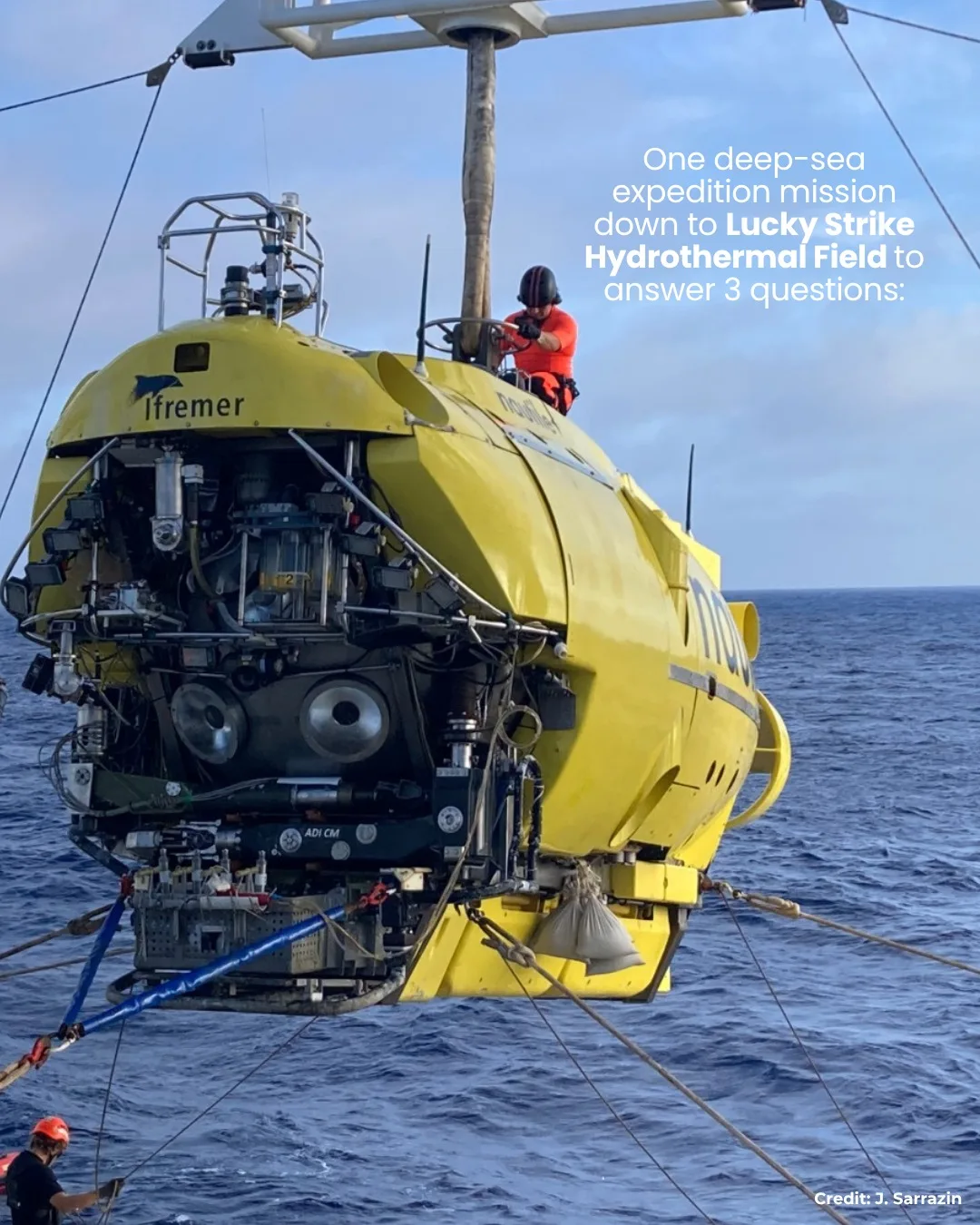
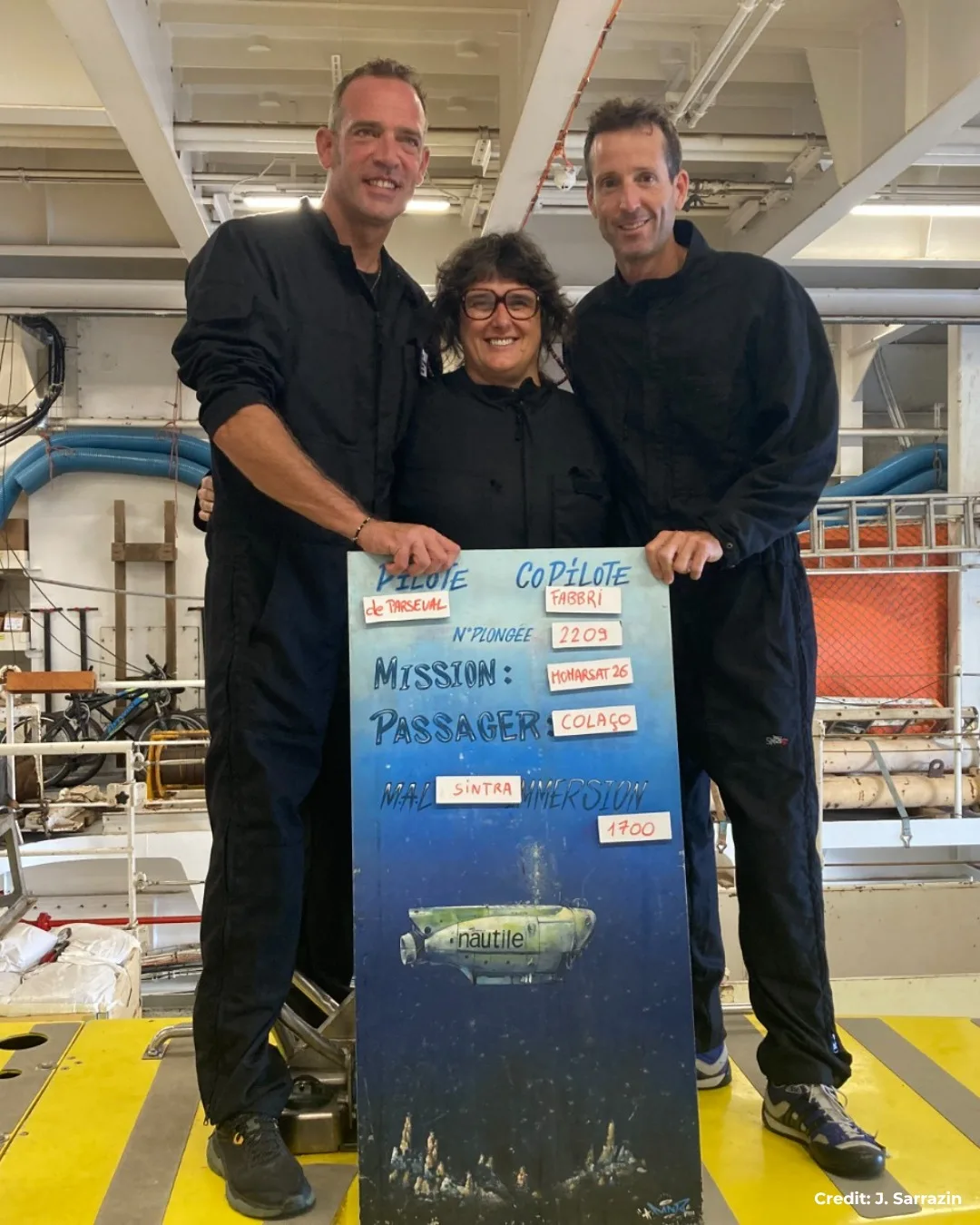
As the MoMARSAT 2026 mission comes to an end , after 19 days on board the research vessel 𝘗𝘰𝘶𝘳𝘲𝘶𝘰𝘪 𝘗𝘢𝘴? working at the Lucky Strike hydrothermal vent field, we look back at some of the moments from OKEANOS researcher Ana Colaço’s dive aboard the Nautile. At around 1,700 metres depth, Ana worked directly on the hydrothermal structures, contributing to the study of the recruitment patterns of 𝘉𝘢𝘵𝘩𝘺𝘮𝘰𝘥𝘪𝘰𝘭𝘶𝘴 𝘢𝘻𝘰𝘳𝘪𝘤𝘶𝘴 mussels, monitoring of inactive areas and the study of deep-sea biodiversity.
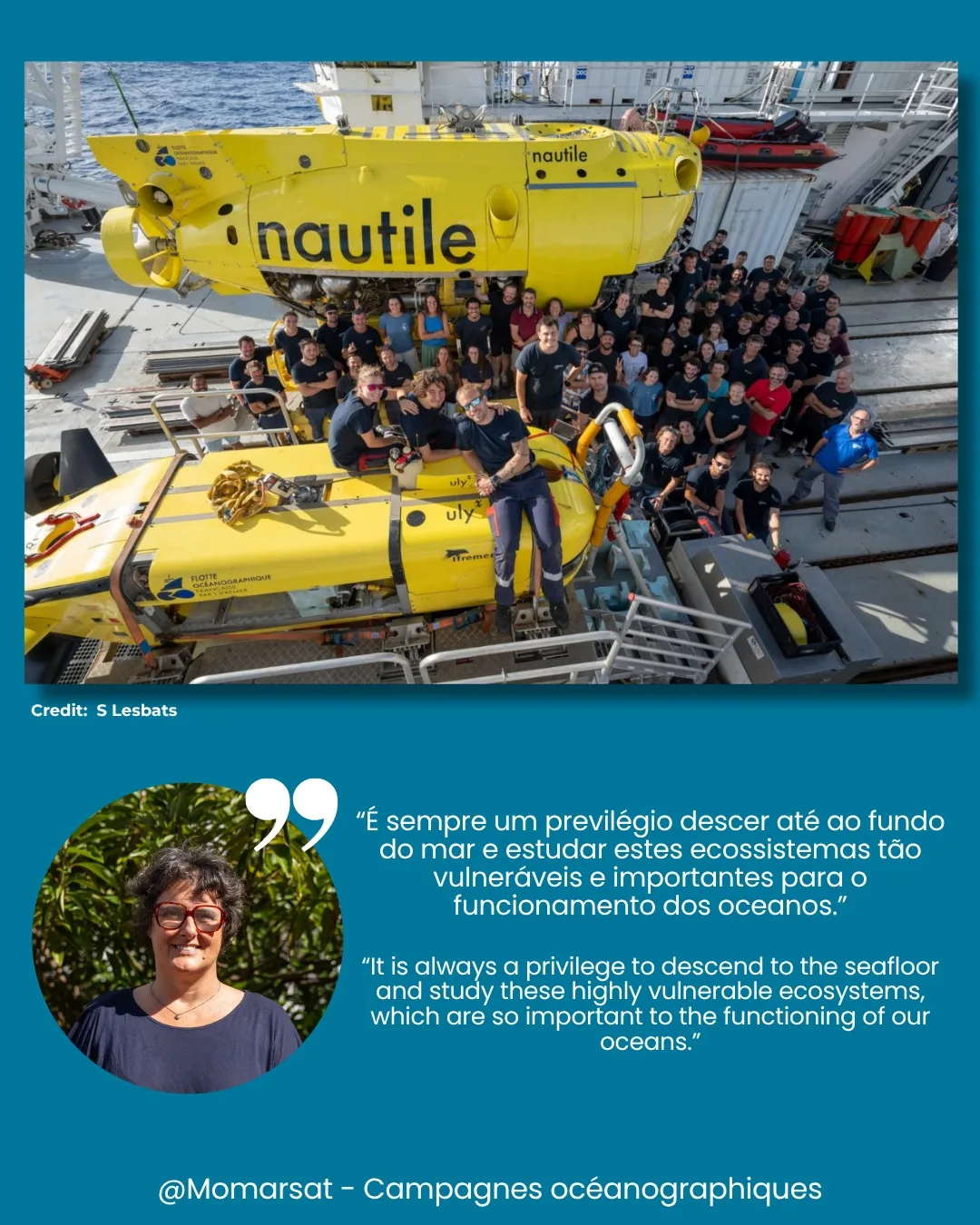
One of the highlights was Ana’s dive aboard the Nautile submersible, taking her directly to the deep-sea environment where this research takes place.
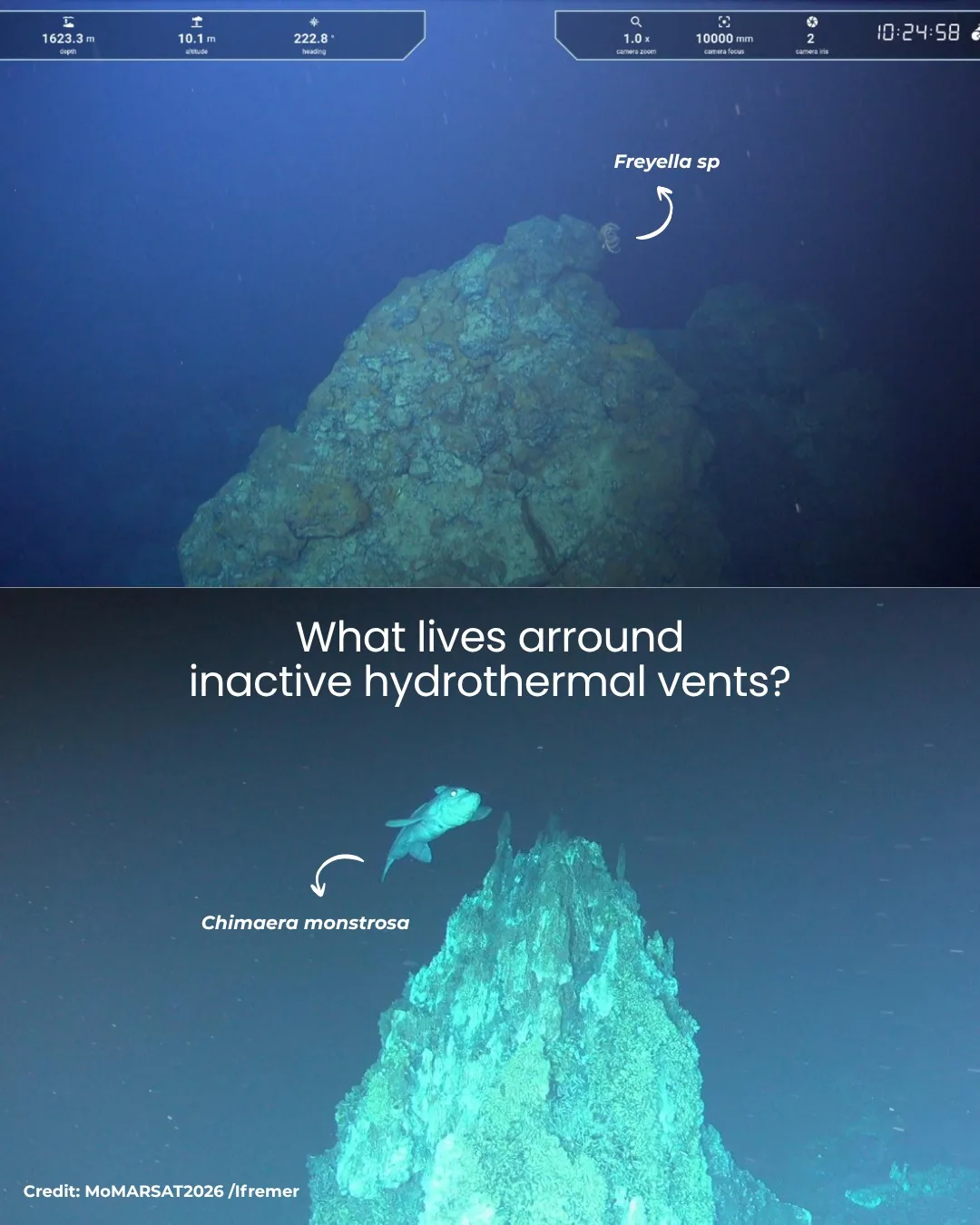
Ana Colaço is studying the fauna associated with inactive hydrothermal structures at Lucky Strike. These areas provide a different environment from active vents, allowing researchers to investigate which species inhabit them, how communities are structured, and how deep-sea organisms colonise these habitats. Among the species of interest are deep-sea chimaeras, cartilaginous fish adapted to life at great depths.
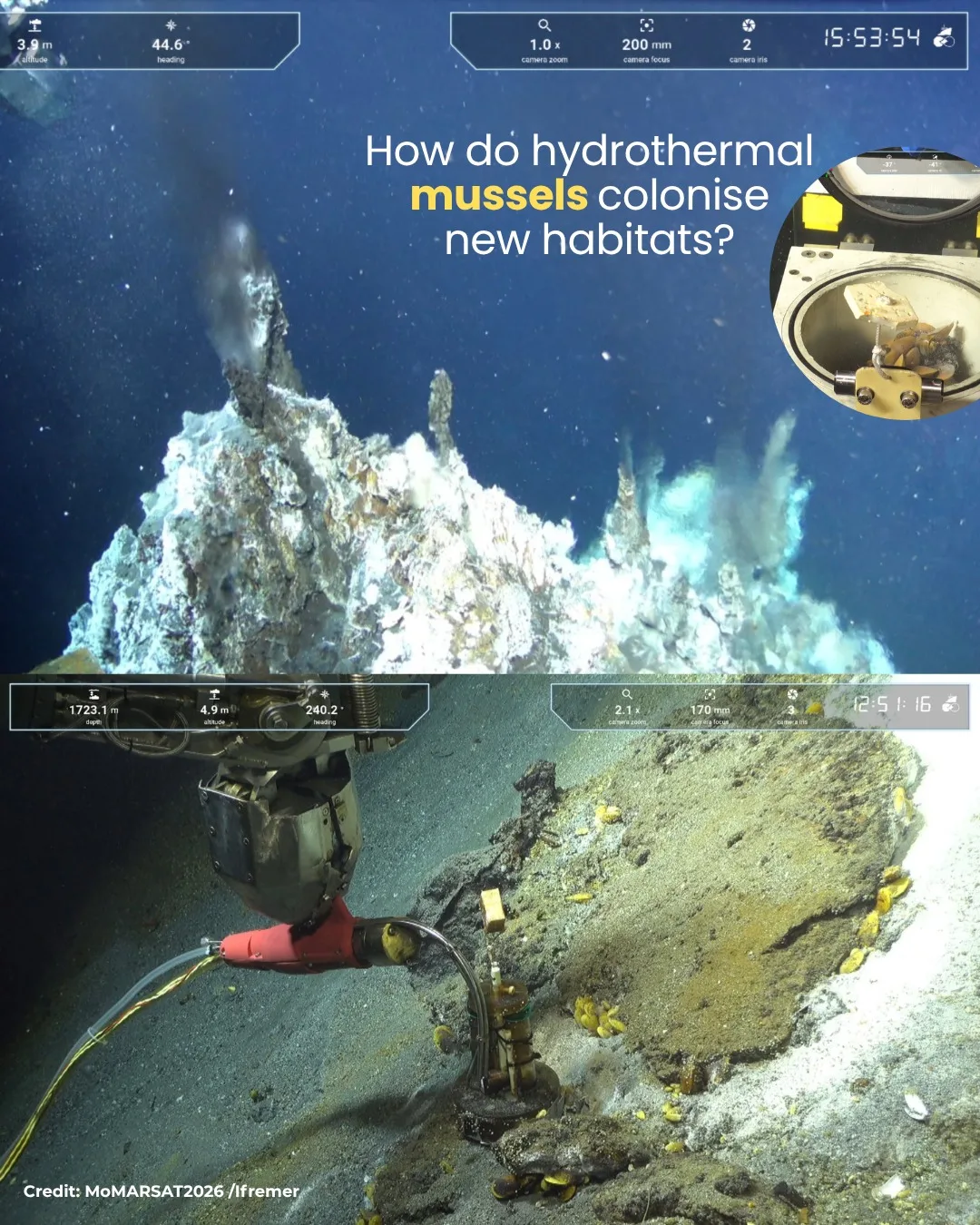
During the dive, she was able to observe and work around the hydrothermal structures and collect 𝘉𝘢𝘵𝘩𝘺𝘮𝘰𝘥𝘪𝘰𝘭𝘶𝘴 𝘢𝘻𝘰𝘳𝘪𝘤𝘶𝘴 mussels for ongoing research, one of the characteristic species of the Azorean deep-sea vents. Their unique relationship with symbiotic bacteria makes them key organisms for understanding how life adapts to extreme environments, and for ongoing research into their immunity, microbial interactions and potential biomedical applications.
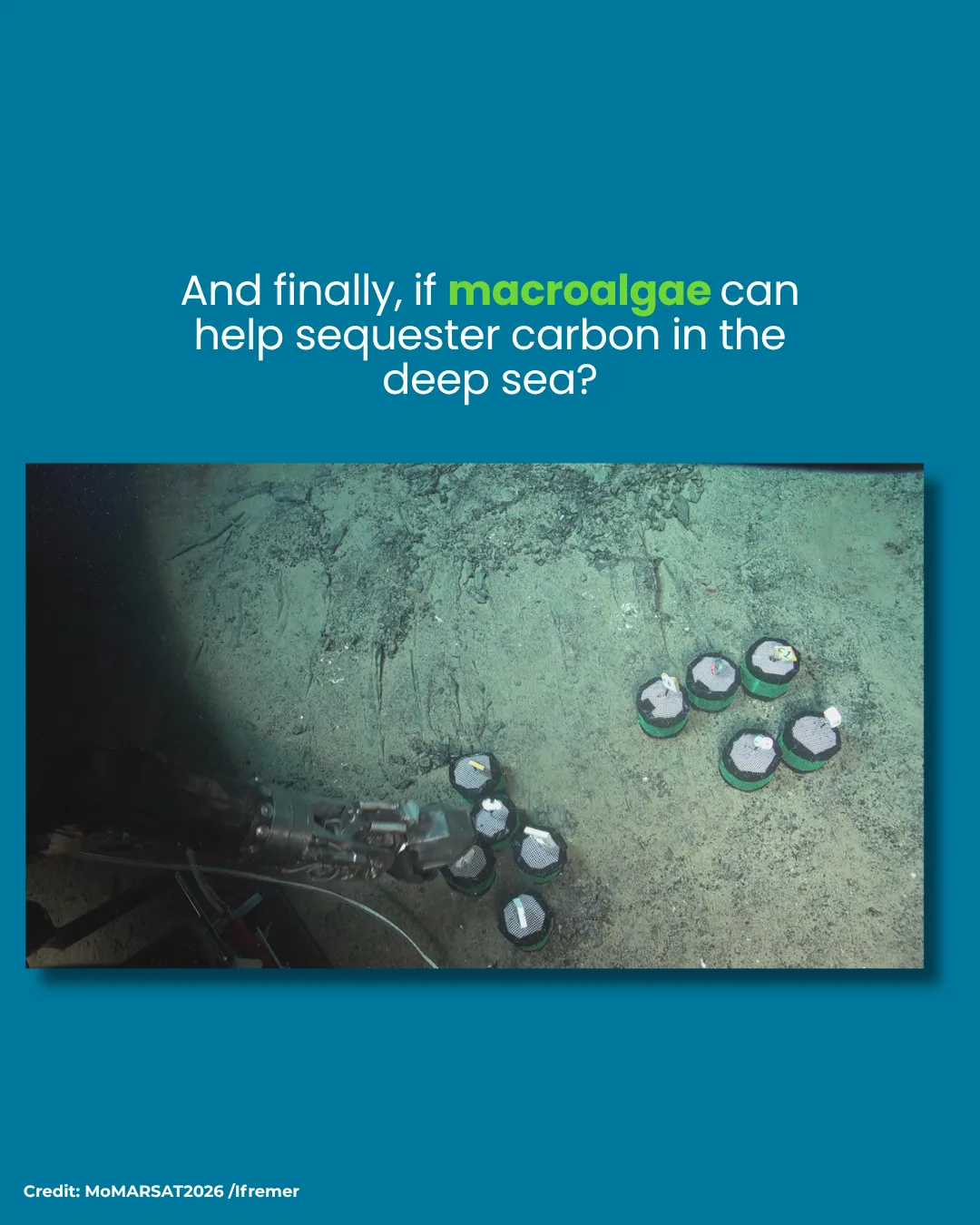
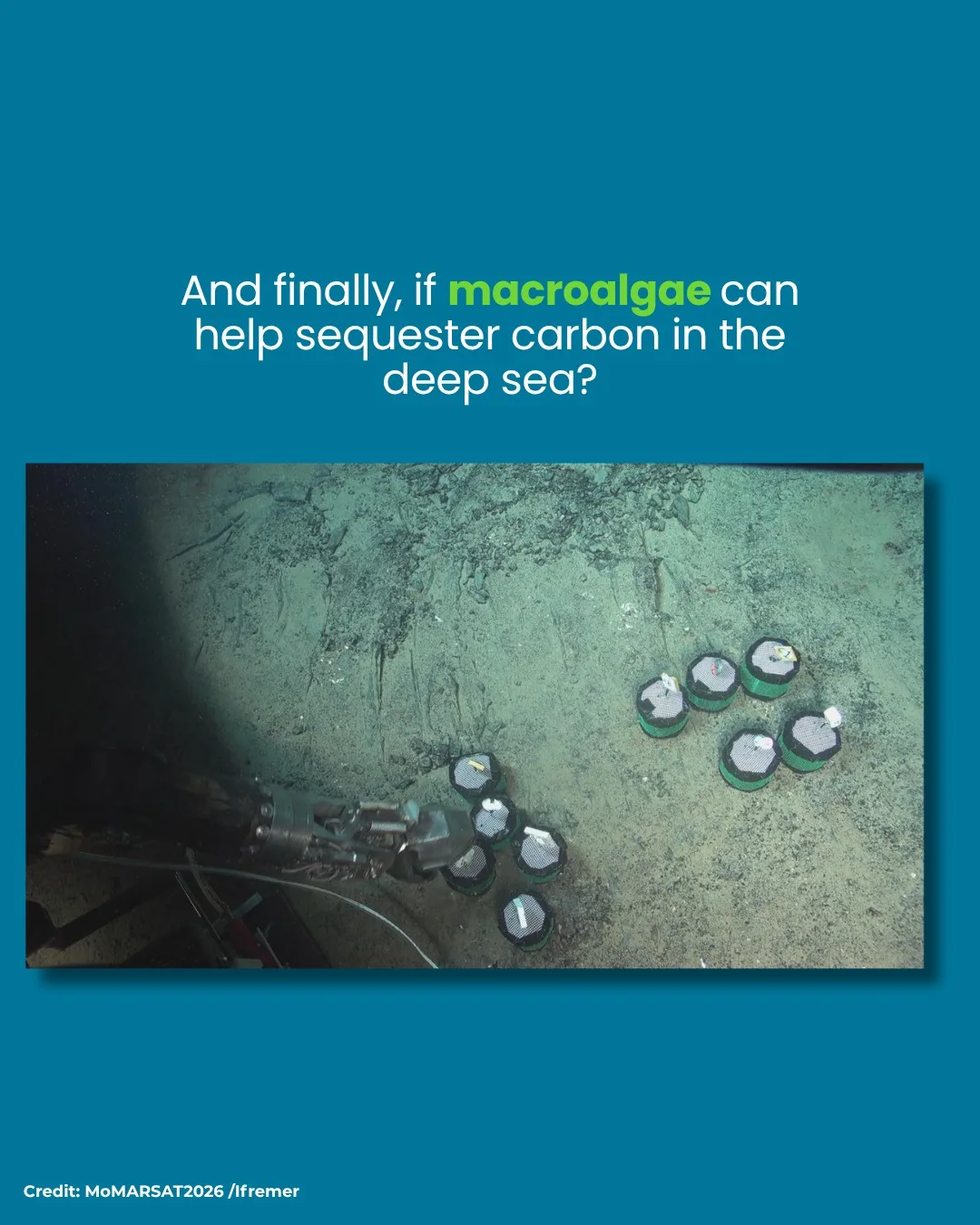
The campaign also included an experimental study involving macroalgae, investigating their potential role in carbon sequestration and contributing to a broader understanding of the links between deep-sea ecosystems, biodiversity and the global carbon cycle.
From the surface to the deep ocean, every dive brings us closer to understanding these remarkable ecosystems. Take a look at some moments from the depths of Lucky Strike.